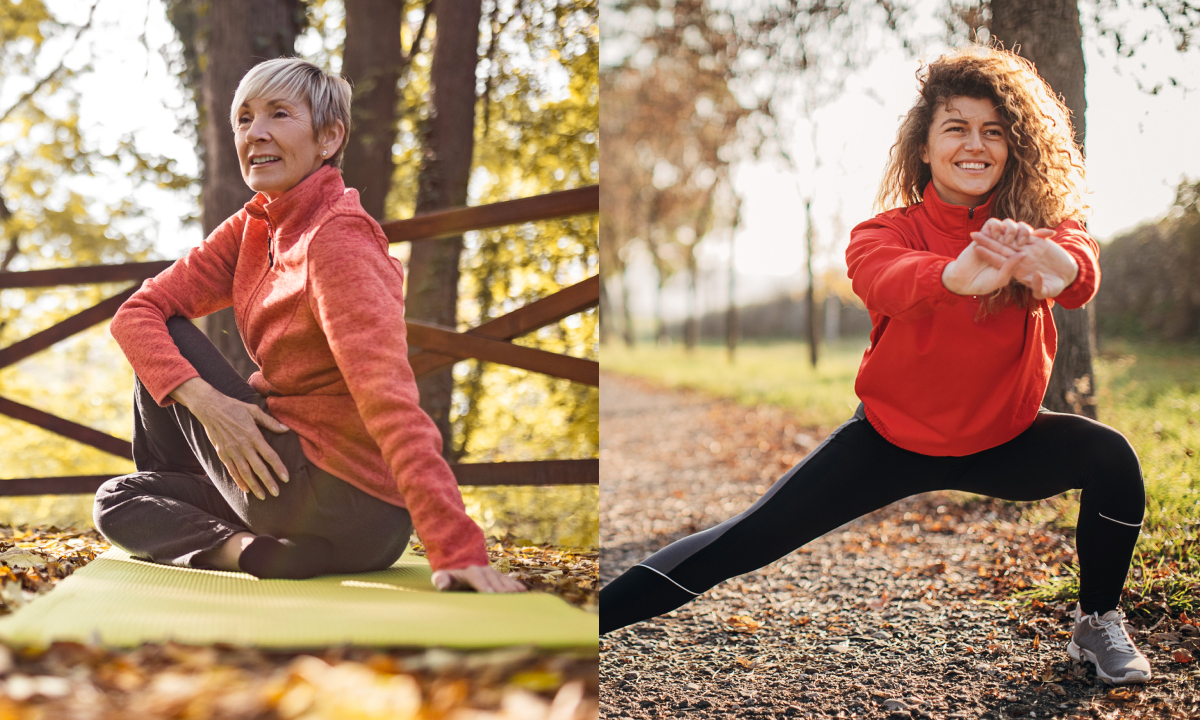


You might notice small reminders from your body along the way. Groceries feel heavier than they used to. Getting up from the floor takes a moment longer. Your back complains when you crouch. They’re subtle signals, but they matter.
Muscle strength is one of the biggest factors in how well we move through daily life. Yet strength training — the most effective way to maintain it — is a habit many of us overlook.
With its sense of fresh beginnings, spring is an ideal time to start rebuilding the strength that supports an active life.
Why Your Muscles Matter
Strength doesn’t disappear overnight. It fades gradually, almost without you noticing.
Your muscles naturally weaken as you age, often starting in your 30s. You lose about 3–8% of muscle each decade, and after 60, the loss speeds up if you don’t do anything about it. Year to year it’s subtle, but eventually everyday tasks begin to feel harder than they used to.
This matters because muscle strength is one of the best predictors of healthy aging. It’s not just about lifting heavy things. Stronger muscles support better balance, reduce the risk of falls, improve overall health and help you stay independent longer.
The good news is, muscle loss is reversible. At any age, your body can adapt, and even people who’ve never trained before can build meaningful strength once they start.
What Strength Training Actually Involves
Strength training is simply about challenging your muscles through practical movements like standing, lifting, carrying, and reaching. No gym or fancy equipment required. Just two to three short sessions a week, with gradual progression, is all it takes to deliver meaningful benefits for your strength, health, and daily life.
strengthen during rest. That’s why two to three sessions weekly produces
better results than training every day.1
Why Strength Matters at Every Age
What’s Happening
Your peak physical years: bones, density, muscle mass and metabolism work at their highest efficiency and builds strength efficiently
Why Strength Training Helps
Maximize your performance to create the strongest reserve for later. Build habits and routines that last a lifetime
What to Focus on
Build strength in all areas and challenge yourself progressively and establish a consistent routine to maintain muscle mass
What’s Happening
Muscle mass begins to decline (about 3% per decade after 30). Metabolism slows. Bone density plateaus and starts to decline
Why Strength Training Helps
Slow muscle loss before it accelerates. Maintains bone density and metabolism. Builds a reserve of strength for later decades
What to Focus on
Prioritize consistency over schedules. Keep sessions short and effective. Challenge muscles with progressive loads. Focus on compound movements
What’s Happening
Muscle loss becomes more noticeable (sarcopenia accelerates). Hormonal shifts affect muscle maintenance and fat distribution. Joints may start feeling stiffer
Why Strength Training Helps
Slows muscle loss to preserve mobility. Protect joints and maintain your active lifestyle. Manage stress levels
What to Focus on
Train 2-3x/week consistently—weekly non-negotiable. Include mobility work. Start early. Balance hard work with proper recovery
What’s Happening
Muscle loss accelerates (especially without intervention). Metabolism slows. Bone density decline accelerates, increasing fracture risk
Why Strength Training Helps
Prevents continued muscle and bone loss. Reduces fall risk and injury. Maintain independence and reduce fall risk
What to Focus on
Prioritize full-body functional movements. Include balance and stability work. Focus on maintaining what you have more than building — say, symptoms
What’s Happening
Significant muscle-loss without intervention. Difficulty with activities of living (climbing stairs, carrying groceries). Daily tasks require more effort
Why Strength Training Helps
Dramatically reduce fall and injury risk. Maintains ability to function independently. Keeps you strong, active, and ready to take up hobbies
What to Focus on
Train for daily living tasks — include balance exercises, sit-to-stands, light resistance movements. Maintain what you have, not chase progress, but not be hard on risk injury. Get professional support if helpful.
What’s Holding You Back?
“I don’t have time.”
Fifteen to twenty minutes, two or three times a week, is enough to see real results. You’re not looking for hour-long gym sessions — just short, focused work that fits into your week.
“I don’t belong in a gym.”
You don’t need one. Many people train effectively — and more comfortably — at home with basic equipment. And age isn’t a barrier either. People build meaningful strength at any stage of life.
“I have pain or injuries.”
Done properly, strength training often reduces pain by supporting the joints. Start gently, listen to your body, and get guidance if needed.
“I’m worried about getting bulky.”
Regular strength training won’t do that. Significant muscle size takes specialized programs and years of effort. What you’ll gain is strength and confidence.
Take Action This Spring
Strength training is one of the most valuable investments you can make for your health as you age. Because strength isn’t only about what you can lift — it’s about the freedom to live the way you want, for as long as possible. You don’t need special genetics, expensive equipment, or hours of free time — just consistency and a willingness to challenge yourself a little at a time.
Start this week with one simple step. Choose one exercise and practice the movement with a light weight — or just your bodyweight — until it feels comfortable. That’s all it takes to begin.
Spring is a natural moment for fresh starts — and your future self will thank you for starting now.
Sources
1. HealthLinkBC. (n.d.).
Healthy muscles. Government of British Columbia. https://www.healthlinkbc.ca/healthwise/healthy-muscles
Public Health Agency of Canada. (2023).
Strength-training and balance activities in Canada: Historical trends and current prevalence. Health Promotion and Chronic Disease Prevention in Canada, 43(5).
Health Canada. (1998).
Canada’s physical activity guide to healthy active living. Minister of Public Works and Government ServicesCanada.
This article is intended as general information only and is not to be relied upon as constituting legal, financial or other professional advice. A professional advisor should be consulted regarding your specific situation. Information presented is believed to be factual and up-to-date but we do not guarantee its accuracy and it should not be regarded as a complete analysis of the subjects discussed. All expressions of opinion reflect the judgment of the authors as of the date of publication and are subject to change. No endorsement of any third parties or their advice, opinions, information, products or services is expressly given or implied by Royal Bank of Canada or any of its affiliates.