Charity runs, community races, and local fitness challenges are becoming an increasingly popular way for people of all ages and fitness levels to get moving. And for many, competing isn’t really the point. The appeal is in the experience itself: training toward a shared goal, building movement into a routine, and being part of a community along the way.
The Social Side of Staying Active
One of the biggest draws of community-based training has little to do with the workout itself. Running clubs, team challenges, and group fitness events offer something that solo workouts often can’t: a sense of belonging. When you’re moving alongside others, exercise starts to feel less like effort and more like taking part in a shared pursuit.
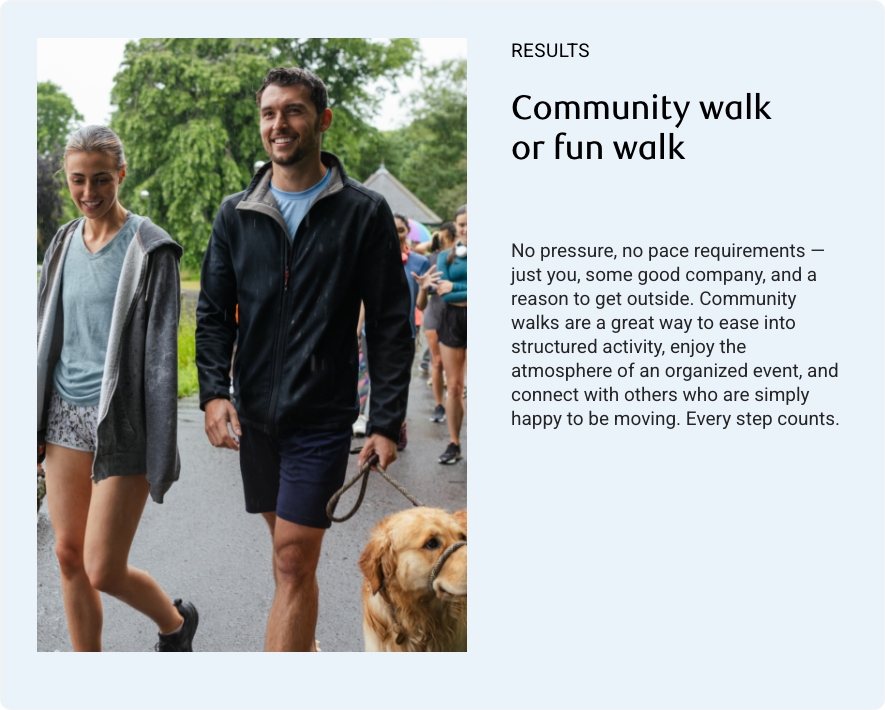
That sense of community can be a powerful motivator. Training alongside others often makes it easier to stay engaged, especially on the days when motivation is in short supply. These environments can also be particularly welcoming for people who are returning to activity after a break or trying something new for the first time. There’s no single pace or level of experience required to participate. Instead, community-based events bring together people with different goals and abilities, creating a supportive atmosphere where everyone can move forward in their own way.

The Power of a Shared Goal
A specific event on the calendar does something a general intention to “get more active” rarely can – it gives your training real direction. Workouts become steps toward something tangible, and as the event approaches, the motivation builds naturally. There’s a finish line to picture, a timeline to follow, and a sense of momentum that’s hard to manufacture on your own.
Shared goals also create built-in accountability. When someone is expecting you at a morning run or training session, showing up becomes easier – which is part of why people who train in groups tend to stay more consistent than those going it alone. The process starts to feel less like something you have to do and more like something you’re part of.

Movement at Your Pace
While the goal may be shared, the way you get there is always personal. Preparing for a community event doesn’t mean overhauling your routine or pushing yourself to the limit. It means building gradually, showing up consistently, and starting from where you are right now – not where you think you should be. The goal isn’t to do more; it’s to do enough, regularly, over time.
Rest and recovery are part of that process, not a step backward or a sign of falling behind. Your body adapts between sessions, not just during them – so the days off matter as much as the days on. Just remember: there isn’t one “right” way to prepare. What matters most is finding an approach that feels manageable, getting started, and building a rhythm you can return to again and again.

Finding Your Event, Finding Your Community
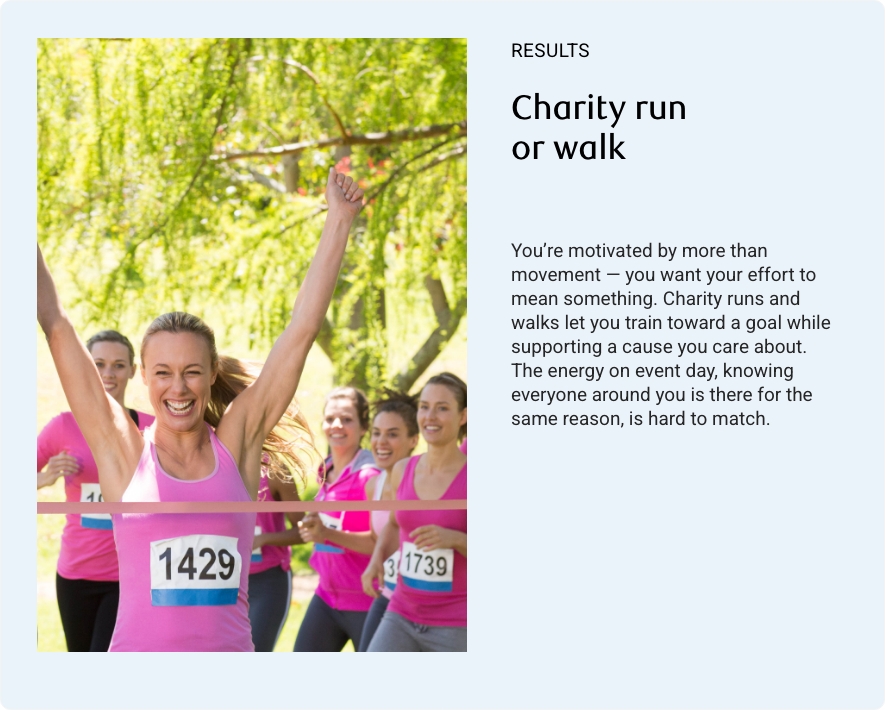
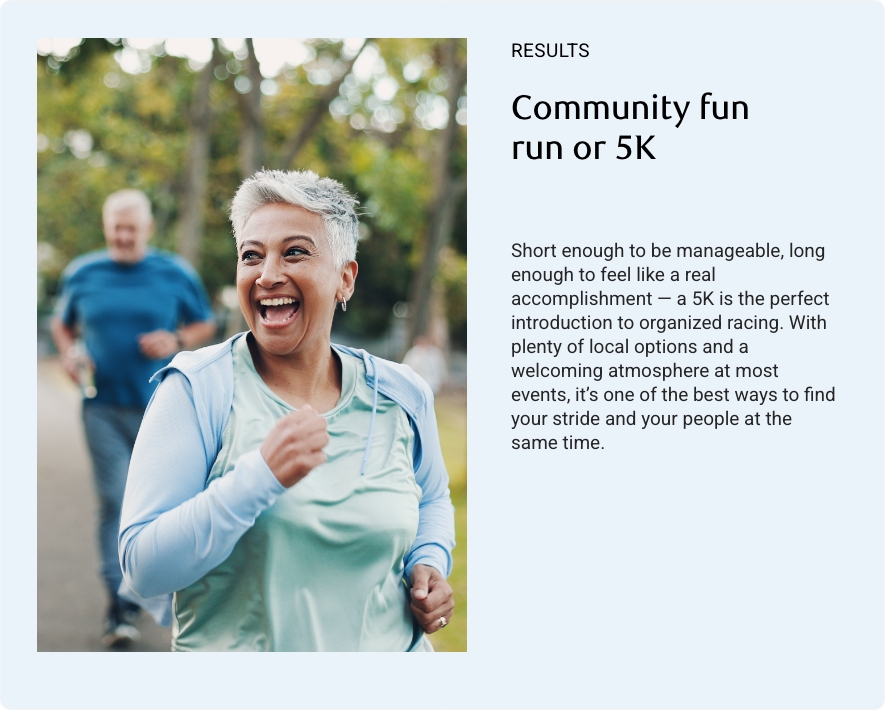
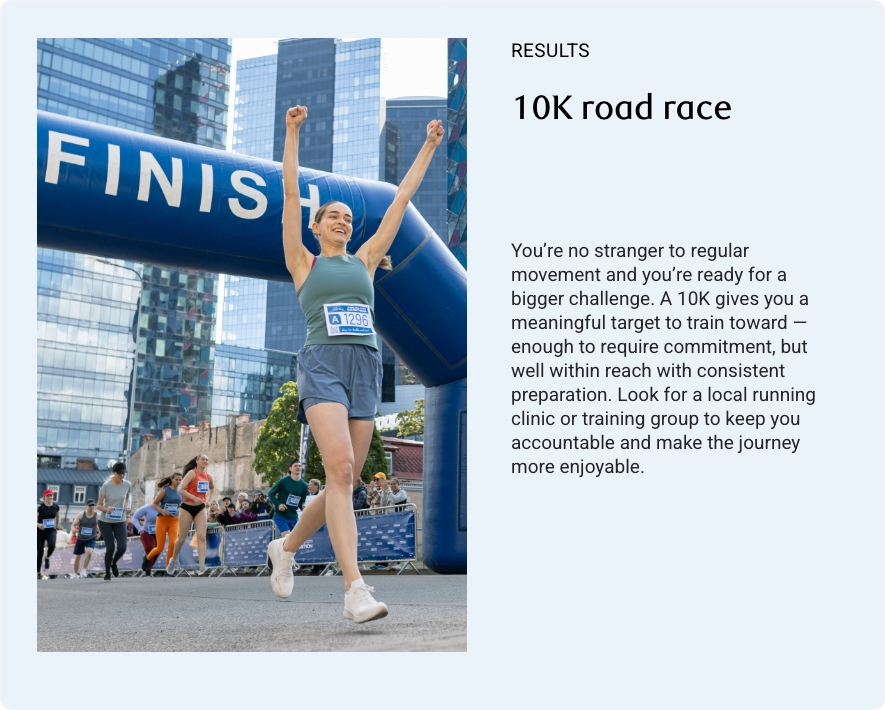
Looking for an event to work toward? Community fun runs, charity walks, 5Ks, local obstacle courses, and larger events like RBC Race for the Kids offer options for different fitness levels and comfort zones. When choosing your first event, focus on something that feels achievable rather than intimidating. Many events are supported by beginner-friendly training groups or clinic programs, which can help you build confidence as you go. Giving yourself enough lead time also makes the process feel more manageable – and more enjoyable.
The goal doesn’t need to be performance. Finishing, participating, and showing up consistently are all meaningful outcomes – and the habits, friendships and sense of accomplishment you build along the way tend to last well beyond race day. When movement becomes a shared experience, it can feel more sustainable, motivating and enjoyable. That’s the true power of training together: creating a reason to move, a community to support you and a journey worth sharing, no matter your pace or starting point.
What Kind of Event Is Right for You?
Answer 5 quick questions to find a community race or fitness event that fits your lifestyle.
This article is intended as general information only and is not to be relied upon as constituting legal, financial or other professional advice. A professional advisor should be consulted regarding your specific situation. Information presented is believed to be factual and up-to-date but we do not guarantee its accuracy and it should not be regarded as a complete analysis of the subjects discussed. All expressions of opinion reflect the judgment of the authors as of the date of publication and are subject to change. No endorsement of any third parties or their advice, opinions, information, products or services is expressly given or implied by Royal Bank of Canada or any of its affiliates.